Experience on parenting and children’s health
There is no universal "perfect parenting formula". All standards, guidelines, and experiences must first be adapted to the individual characteristics of your child. The ultimate goal is to achieve a dynamic balance of physical health, psychological security, and social adaptability, rather than aligning with a unified set of rulers.
Speaking of this, I am reminded of an example I encountered in the pediatric clinic last year. The baby was only 4 years old. She suffered from repeated colds and fevers for almost 3 months. The blood routine and immunity tests showed no problems. Finally, an old doctor asked a few more questions about the family situation, only to find out that she had just given birth to a second child. Her parents were hanging around the baby every day, and the eldest child was showing signs of wilting every day, and he didn't even want to go to his favorite playground. Later, my parents spent one hour a day alone with the eldest child. Within half a month, the baby no longer had a fever and was jumping around more happily than anyone else. Don’t think this is metaphysics. More and more studies are now proving that long-term emotional stress will directly affect children’s immunoglobulin levels. However, different academic schools come from different angles: Psychoanalytically oriented parenting teachers will emphasize that giving children a sense of security is the first priority, while behaviorist researchers may suggest that you use specific positive guidance to help children adapt to environmental changes. Both methods are effective. The key is which one your family adopts.
I was worried about my baby's lagging behind in major sports. The babies around me were all walking at 10 months old, and my 11-month-old baby was still struggling to crawl. I almost signed up for a sensory integration training class, but a pediatric rehabilitation practitioner I knew well scolded me: "Your baby was born in winter. He was dressed like a ball for the first half of his life. He turned over later than others. What's weird about him crawling late?" Developmental milestones are window periods, not deadlines. As long as he can interact with you and react normally, he will be fine if he walks two months later. ”I checked later and found that there is indeed a lot of controversy about sensory integration training: one group believes that many children now have limited space for activities and a high rate of sensory integration disorders. Early intervention can avoid subsequent learning disabilities. ; The other group believes that most of the so-called "sensory integration disorders" are caused by parents' worries. They usually take their children to play in the community, climb trees, step in puddles, and play in the sand. All problems can be solved. Spending tens of thousands of dollars to enroll in classes is purely an IQ tax. Now I think both sides are reasonable. If there is indeed a medically indicated disorder, then intervention is necessary. If the baby is just walking two months later than others and is usually a little restless, there is really no need to mess around. Taking him for a few more laps outdoors is better than anything else.
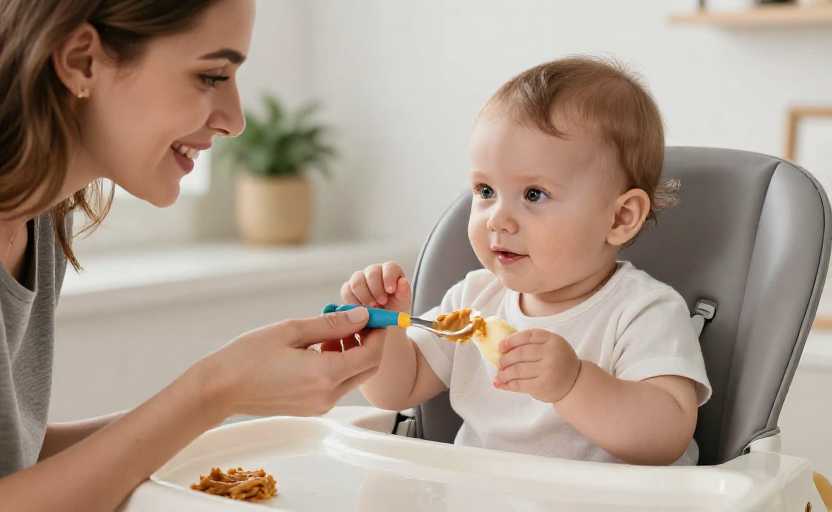
There are also endless debates about feeding. Some say that it is best to feed the baby by hand until he is 2 years old, some say that bottle feeding is more convenient for the mother to recover, and some say that complementary feeding can only be introduced after 6 months. It does not work if it is too late or too early. My best friend's baby has allergies. At that time, I added egg yolks for 6 months according to the child care guidelines. After eating, he broke out in rashes all over his face. Later, he changed to a pediatric gastroenterologist who said that babies with allergies can appropriately delay the introduction of allergenic foods. The delay of 1-2 months will not cause nutritional deficiencies. Later, according to this, the baby can eat anything now and is as strong as a calf. To be honest, the guidelines are a reference for most people, not tailor-made rules for your baby. If your baby is allergic to a certain complementary food or has diarrhea after drinking a certain milk powder, no matter how good the guide is, you have to stop immediately. Being flexible is more important than anything else.
I had an argument with my mother before about whether I should cover my sweat when my baby has a fever. I held the latest guidelines for children with fever and told me to physically cool down. My mother said that she raised me to cover my sweat when I was a child. In the end, the pediatrician gave us a word of advice: "It depends on the baby's condition. If he has a fever, his hands and feet are cold, and he is shivering, wear warmer clothes. If he is hot all over and his face is red, wear less to dissipate heat. If the temperature is below 38.5°C, as long as he is in good spirits, he does not even need to take medicine and just drinks more warm water. ”You see, there is no black-and-white right or wrong, it’s all about adjusting according to the baby’s situation.
Nowadays, many people say that parenting is metaphysics, but I don’t think so. It’s just that we are too eager to find a standard answer. We always think that we can raise healthy babies by following the instructions. But in fact, every baby is a different sapling. Some like shade and some like sun. If you have to move the shade-loving ones to the sun, they will definitely not grow well. My current principle is to follow the evidence-based guidelines in the general direction, and follow the baby's reaction in the small details. If he is happy, can eat, sleep, and has no problems, it is more effective than all standards. After all, the ultimate goal of raising a baby is to let him grow up healthy and happy.
Disclaimer:
1. This article is sourced from the Internet. All content represents the author's personal views only and does not reflect the stance of this website. The author shall be solely responsible for the content.
2. Part of the content on this website is compiled from the Internet. This website shall not be liable for any civil disputes, administrative penalties, or other losses arising from improper reprinting or citation.
3. If there is any infringing content or inappropriate material, please contact us to remove it immediately. Contact us at: