sleep health report
There is no need to get stuck in the so-called "golden sleep standard" of 8 hours. As long as you meet three conditions - being fully awake within 10 minutes after waking up, not being uncontrollably sleepy during the day, and not falling asleep for more than 30 minutes/waking up early for more than 2 hours for more than a week in a row, your sleep is completely up to standard, and there is no need for additional anxiety.
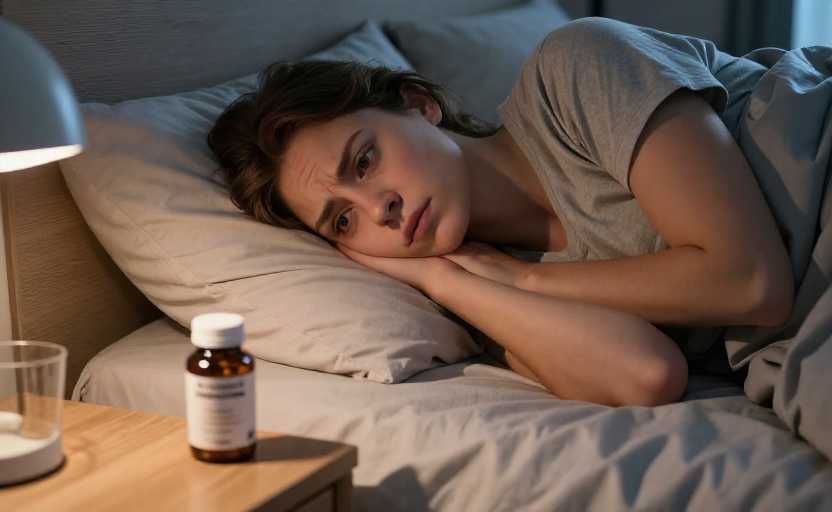
To be honest, I have seen too many people who are PUA by the same sleep standards. An Internet operator visitor I received last month had 7 alarm clocks set on his mobile phone. He had to sleep for 7 hours and 50 minutes accurately. If he missed 10 minutes, he would record "insufficient sleep" on his health clock. He would feel flustered during the day and always felt that he was going to die suddenly. As a result, he went for a polysomnography and found that deep sleep accounted for 22% of the time. The rhythm was not stable. He was completely scaring himself. In the past two years, traditional sleep medicine has still adhered to age-stratified duration standards: 8-10 hours for adolescents, 7-9 hours for adults, and 6-8 hours for the elderly. However, the Stanford Sleep Research Center proposed the concept of "individual sleep threshold" a few years ago. Even if a naturally short sleeper only sleeps 4-5 hours a day, as long as they have enough energy during the day, there will be no problem. There are also natural long sleepers who need to sleep for 10 hours before they can enter the state. There is no need to compare with others.
But even if you meet the health standards, don’t fake it. Many people stay up until two or three o'clock on weekdays and sleep for more than ten hours with their eyes closed on weekends. They think that just enough time is enough. This kind of operation is the most harmful to sleep rhythm. I have previously conducted follow-up visits to more than 300 users with sleep disorders, and found that those who slept more than 2 hours more on weekends than their daily schedule had a 47% increase in the probability of having difficulty falling asleep in the next week. Of course, there are also studies in the field of sports medicine that put forward different views: If you occasionally stay up late due to high-intensity overtime work or extreme exercise, a single catch-up sleep can indeed quickly reduce the cardiovascular burden. There is no need to kill the catch-up sleep all at once. The key is not to turn "staying up late on weekdays and catching up on weekend sleep" into a fixed habit.
Let me tell you something interesting. I met a fitness trainer user a while ago. He sleeps 5 hours a day and is very energetic during 8 classes during the day. The measurement shows that the proportion of deep sleep can reach 25%, which is much higher than many people who sleep for 8 hours and only account for 10% of deep sleep. Do you think this is annoying? Many people always think that "falling asleep" is a sign of good sleep, but it is not the case - if you lie down at your workstation at noon and fall asleep with your head tilted for 10 seconds, or if you lie down and scroll through your phone until you fall asleep unconsciously, and when you wake up, your phone is still smashed on your face. This is not a good sleep at all, but a sign that your body has owed a sleep debt. Just like you originally set the automatic low-battery shutdown for your mobile phone at 11 o'clock, but every time you plug in the power bank, it will turn off at 2 o'clock. After a long time, the system does not know when to activate the power saving mode, but doesn't it just say that it is out of power?
Many people find ways to sleep poorly, such as drinking hot milk, soaking their feet in hot water, listening to white noise, and doing a bunch of sleep rituals before going to bed. As a result, they still keep their eyes open for half an hour in bed. My general advice to users is: if you really haven’t fallen asleep after lying down for 20 minutes, don’t lie down. Get up, turn on a small warm light on the sofa, read a paper book for a while, and then go back to sleep when you feel sleepy. Lying hard will only make you associate "bed" with the feeling of "anxious and unable to sleep", which will make it more difficult to fall asleep. Of course, there are different schools of thought: Practitioners of cognitive behavioral therapy (CBT-I) insist that you must leave the bed and not touch any electronic devices, while mindfulness schools believe that you can do body scans while lying down without getting up. You can choose a method that is comfortable for you. There is no need to follow a certain standard.
Oh, by the way, don’t just take melatonin when you can’t sleep well. Many people think that melatonin is a health product with no side effects, and they can be taken for years after taking it. In fact, melatonin is used to regulate sleep rhythms, not as a sleep aid. Taking it in large doses for a long time will inhibit the secretion of melatonin, and the more you take it, the more useless it becomes. If you meet the criteria for unhealthy sleep we mentioned at the beginning for more than 2 consecutive weeks, don’t search for random remedies on the Internet. Go to a sleep specialist for a polysomnography first, which will be more effective than trying a hundred methods blindly.
To put it bluntly, sleep is a human instinct. When you were a child, how could you worry about how many hours of sleep you had today? When we grow up, we are bound by various KPIs and health standards. Even when we sleep, we have to check the time and quality, but we have lost our instincts. Relax, it's not so easy for you to have problems just because you missed half an hour of sleep. On the contrary, worrying about not sleeping well every day is much more harmful than missing two hours of sleep.
Disclaimer:
1. This article is sourced from the Internet. All content represents the author's personal views only and does not reflect the stance of this website. The author shall be solely responsible for the content.
2. Part of the content on this website is compiled from the Internet. This website shall not be liable for any civil disputes, administrative penalties, or other losses arising from improper reprinting or citation.
3. If there is any infringing content or inappropriate material, please contact us to remove it immediately. Contact us at: