Dietary taboos on taking Chinese medicine
It does not offset the properties of the medicine, does not aggravate existing symptoms, and does not hinder the absorption of the active ingredients of the medicine. All other taboos must be adjusted according to the prescription, disease condition, and personal constitution. There is nothing that must not be eaten.
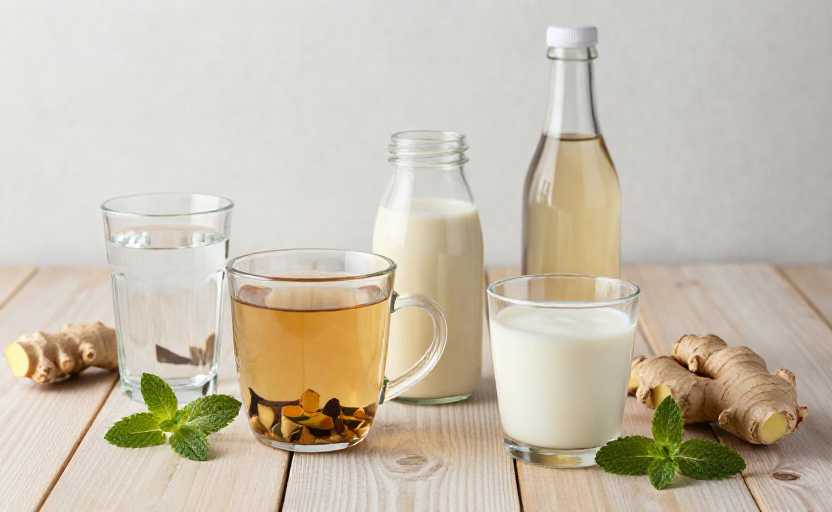
I met a 20-year-old girl during a follow-up visit to a provincial traditional Chinese medicine doctor. She had been prescribed a prescription to warm the menstruation and dispel the cold due to chronic menstrual cramps. On the third day after taking Wanglao Ji with iced milk tea, she was so painful that she went back to the hospital for a follow-up consultation in a cold sweat. The old doctor added two kinds of painkillers to her, and said with laughter and laughter, "I just warmed up your belly with this medicine, but you drank two cups of ice and poured it out directly for me. Isn't this a waste of food?"
But this does not mean that Bing is the mortal enemy of taking Chinese medicine. Last week, a young man was prescribed Qingwei Powder for swollen gums and constipation due to stomach fire. The doctor specifically told him to eat more room-temperature pear and white fungus soup instead of hot pot and barbecue. Cool food can help the medicine go down.
Regarding the severity of taboos, different schools of traditional Chinese medicine actually have different tendencies. For example, many doctors who advocate classic prescriptions nowadays actually have very loose dietary restrictions. In addition to not eating too much and not touching foods that are obviously counterproductive to the medicinal properties, there is basically no need to pay special attention to dietary restrictions. For example, the note at the end of the prescription of Guizhi Decoction in "Treatise on Febrile Diseases" only mentions "no raw and cold, slimy, meat noodles, five pungents, wine, cheese, stinky food, etc.", and it does not say that daily household meals cannot be eaten. Because doctors of the febrile disease sect mostly treat patients with heat syndrome and exogenous diseases, they often specifically advise against spicy, greasy, and warming foods to avoid aggravating the heat and aggravating the condition.
Speaking of this, I have to mention the most entangled taboo of "fading things", which is also the most controversial part now. Some people think that as long as you take Chinese medicine, you must not touch seafood, beef, mutton, leeks and other hair-raising substances. There are also many modern Chinese medicine doctors who believe that "hair-raising substances" are actually a relative concept, and there is no unified list at all. If you are treating immune-related diseases such as urticaria, eczema, allergic rhinitis, etc., you should try to avoid allergy-causing foreign proteins and high histamine foods such as seafood and mangoes. Otherwise, the rash that is supposed to be given to you to relieve rash will become more rash after eating, and the medicine will be wasted. ; But if you are recovering from a serious illness and have insufficient qi and blood, the doctor will prescribe a prescription to replenish qi and blood. Eating some steamed seabass or stewed lean beef in moderation can supplement high-quality protein, which is much better than drinking white porridge every day.
An old patient came over and asked if it was true that it was said online that you should not drink tea or eat mung beans when taking traditional Chinese medicine. In fact, the core problem is that they are afraid of affecting the efficacy of the medicine: the tannic acid in tea will combine with the alkaloids and heavy metals in traditional Chinese medicine to form a precipitate that is difficult to absorb. The mung bean protein in mung beans has a certain adsorption and detoxification effect. As long as you don’t use tea to deliver the medicine, don’t drink a large bowl of iced mung bean soup just after taking the medicine, drink weak tea or a small amount of mung bean soup more than 2 hours apart, it will have no effect at all. Even if you take a prescription that clears away heat and detoxifies to treat acne or sore throat, drinking mung bean soup can also help to increase the buff.
Another pitfall that many people fall into is that they think that taking tonics must be accompanied by a tonic soup. A while ago, an aunt came for a follow-up consultation and said that after taking spleen-strengthening medicine, her stomach was bloated and she had no appetite. After asking, she found out that her daughter believed that the tonic should be taken with tonic soup. She stewed old hen soup for her every day, and also added astragalus root and dangshen. Originally, she came here to make the soup because her spleen was weak and her tongue coating was already thick and greasy. Such a tonic directly blocked the spleen and stomach, and the active ingredients of the medicine could not be absorbed at all. The old doctor asked her to stop all soup supplements and just eat home-cooked light meals and stew some soft radish soup to ventilate her stomach. Within two days, the aunt said her stomach was no longer bloated.
In fact, after all, there are really not so many rigid rules about food taboos when taking traditional Chinese medicine. Most of the lists of "10 foods that must be avoided when taking traditional Chinese medicine" on the Internet are eye-catching content. If you are really afraid of stepping into a trap, when you get the medicine, ask the doctor who prescribes it, "Is there anything you should be careful not to take with this medicine?" It is much more reliable than searching for general contraindications for a long time - after all, he knows best the properties of the medicine you prescribe and the problems it treats, and the advice he gives will definitely be the most suitable for you.
Disclaimer:
1. This article is sourced from the Internet. All content represents the author's personal views only and does not reflect the stance of this website. The author shall be solely responsible for the content.
2. Part of the content on this website is compiled from the Internet. This website shall not be liable for any civil disputes, administrative penalties, or other losses arising from improper reprinting or citation.
3. If there is any infringing content or inappropriate material, please contact us to remove it immediately. Contact us at: