Yoga and Tai Chi are connected
Yoga and Tai Chi seem to be two unrelated physical and mental practice systems belonging to the East and the West, but in essence they are highly interconnected - both use breathing as a link to connect body movements and inner consciousness, and ultimately achieve a path of physical and mental balance. There is no distinction between high and low. The overlap in core logic is far greater than the superficial difference.
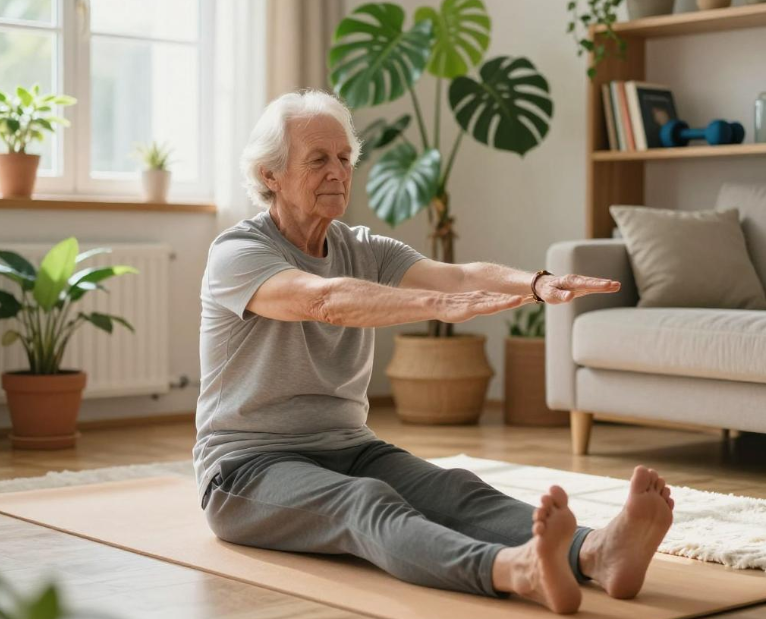
I didn’t believe this statement at all at first. After practicing yoga for 6 years, I always felt that Tai Chi was a pastime for the elders and aunts in the community. It wasn’t until I suffered from a herniated disc last year that I couldn’t do many yoga twists and deep backbends. I was dragged by a friend to take classes at the Tai Chi team downstairs, and I slowly realized the connection. In the first class when I was learning the rising posture, the first thing Master Chen said when he raised his hands was, "Raise your hands to raise your breath first, lower your hands to exhale first, and don't move ahead of your breathing." I was stunned at the time - my yoga teacher has been saying this for almost 5 years. Every time I was holding my breath while doing Down Dog Pose, she would pat me on the back and say the exact same thing.
Later I shared this feeling in the yoga community where I usually stay, and it caused a huge quarrel. Some teachers who taught Iyengar directly refuted: "Yoga originated from the ancient Indian practice system, and its ultimate goal is to realize the true self. Tai Chi is essentially a branch of martial arts, and it has martial arts attributes, which are not the same thing at all." Some boxers who practice Chen-style Tai Chi came to argue: "Many yoga movements are hard on the joints and are against human physiology. Our Tai Chi emphasizes relaxation, relaxation and nature. How can they be connected?" What both sides said makes sense, and I didn't refute it. After all, no one knows who practices it.
Don't tell me, you can only understand it after you practice it. The core logic of the two is almost duplicated. I used to practice Ashtanga, and the teacher asked me to use Ujjayi breathing throughout the whole process. Every series of movements must be stuck in the rhythm of "breathing up, breathing down", half a beat too fast and a half too slow. The last time I learned Tai Chi's cover-hand brachial boxing, Master Chen saw me punching with a blushing face, and gave me a slap on the back: "Exhale when punching." , when you retract your fist, inhale, and the force will follow the breath. All the force you hold is dead, and there will be no force when punching out." I adjusted it three times. The shoulders that were always tight before punching were completely loosened, and the force was actually transmitted directly from the waist and hips to the tips of the hands. It was not even the slightest difference from the requirement in yoga that "force comes from the core."
The awareness training part is even more egregious. Yoga talks about "controlling awareness", which means to withdraw your attention from outside and put it on your own body feelings. Don't always think about what to eat at night or what the message your boss sent in the afternoon means. I always swayed while practicing tree pose before, and my yoga teacher told me, "Don't stare at your feet, find a fixed point in front of you, and focus on where your ankles are exerting force." Later, when I stood in Tai Chi, my feet became numb after 5 minutes and I wanted to move. Master Chen also said the same thing: "Look at your eyes, nose, and heart, and don't worry about that." "When you feel the numbness, feel the soles of your feet against the ground, and breathe steadily." I gritted my teeth and carried it for 3 minutes. The numbness gradually disappeared, and my whole body was as stable as a tree stuck in the ground. This state of concentration with no distracting thoughts in my mind almost completely coincided with the feeling I had when practicing yoga and meditation.
Of course, the two are not completely different. It would be nonsense to insist that they are exactly the same. Yoga often has a "confrontational" attribute: you have to fight against the stiffness of the muscles and the scattered consciousness. Sometimes you grit your teeth and hold on for 10 seconds longer. After the soreness is over, you will feel the refreshing feeling of stretching. Tai Chi is about "smoothness". Walk along with the strength of the body. You don't have to carry it hard. If your knees hurt, just raise the stand higher. You don't have to squat down to the lowest position. If you struggle, you will easily get injured. This is a different path choice between the two, but the final destination is to make you understand your body better and be able to catch your emotions better.
Last Wednesday I worked overtime until 10 o'clock, and my shoulders and neck were as stiff as slate. I went home and practiced Baby Pose for 10 minutes, followed by Simplified Twenty-Four poses twice. My shoulders, which were so tight and painful, were completely relaxed. I fell asleep in 5 minutes while lying on the bed. Before, I would have to toss and turn until late at night. Now every time I take a yoga class, I always mention it to the students that they can try Tai Chi when they have time. Many young girls think it is an activity for the elderly at first. After trying it, they come back to me and say, "Sister, it's true, the feeling after doing it is exactly the same as after practicing yoga."
In fact, is there any barrier between East and West? Anything that can make you calm down and feel your breath and body will always have a clear core. Just like whether you are drinking coffee or tea, what can make you calm down is never what is in the cup, but your heart that is willing to slow down.
Disclaimer:
1. This article is sourced from the Internet. All content represents the author's personal views only and does not reflect the stance of this website. The author shall be solely responsible for the content.
2. Part of the content on this website is compiled from the Internet. This website shall not be liable for any civil disputes, administrative penalties, or other losses arising from improper reprinting or citation.
3. If there is any infringing content or inappropriate material, please contact us to remove it immediately. Contact us at: