
The relationship between parenting and children’s health
Before the age of 12, excluding the influence of congenital genetics and major accidental injuries, the weight of parenting style on the three-dimensional health level of a child's physical, psychological, and social adaptation exceeds 60%. It is the most controllable and adjustable core variable among all influencing factors.
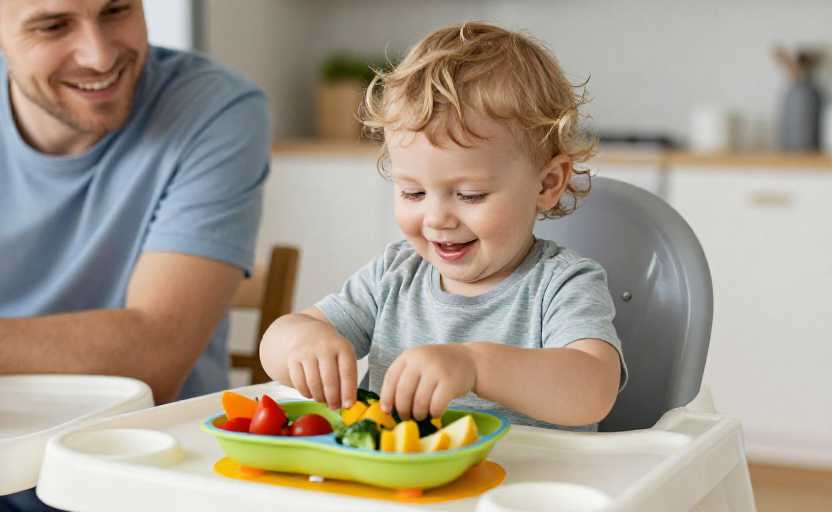
Don't tell me, last month I came across a particularly convincing example at the community child care free clinic: two boys, both 3 years and 1 month old, were born at full term and had almost the same height and weight. But when they stood in front of me, the contrast was particularly obvious - one was dressed two layers thicker than grandma, and his face was red from holding back. Grandma said that she gets pneumonia every time the seasons change, and she has to chase after feeding for half an hour before she can take two mouthfuls. She was found to be anemic + mild calcium deficiency.; The other one wore one less piece of clothing than his father. He was crawling on the clinic table to play with the stethoscope on my table. My mother said that she usually let him grab his own food. She also took him to the park for runs three times a week in subzero weather. He never caught more than two colds throughout the year. All indicators were above the 90th percentile of the growth curve.
"Health" in the eyes of many parents is still at the level of "no fever and no diarrhea," but in fact, in the past few years, I have encountered nearly 40% more children with abnormal mental and behavioral development in outpatient clinics than three years ago, and the causes of their parenting styles can basically be found behind them. Last year, I picked up a 7-year-old boy who blinked frequently and cleared his throat for more than half a year. He went to three hospitals for eye examinations and neurology, but no organic problems were found. Finally, he came to me for a developmental evaluation. After asking, I found out that his parents graduated in 985 and required him to have double hundred in every exam. Last time he scored 98 points in the exam, he was scolded by his father for half an hour when he came home. The symptoms worsened that day. Later, I provided parenting guidance for their family for three months. I asked my parents not to use grades as an excuse and to spend one hour a day with him to play with his favorite Lego. Without taking any medicine, the child's tic symptoms basically disappeared, and his temperament of hiding from people before was gradually relaxed. Last week, my mother came for a follow-up visit and said that he also took the initiative to run for the sports committee member of the class.
The most hotly debated topics in the parenting circle right now are "refined parenting vs. extensive parenting" and "unconditional acceptance vs. establishing rules from an early age." In fact, there is really no absolute right or wrong. The views of both schools have their own practical support. The evidence-based school advocates not to over-intervene and let children grow naturally according to the laws of development. This is no problem for children with ordinary physiques: for example, there is no need to strictly limit how much milk to drink or how many grams of vegetables to eat at each meal, and there is no need to prevent children from touching mud and playing with sand because they are afraid of getting dirty. More exposure to nature can actually enhance immunity. But the experience of traditional parenting is not lost. I met a highly sensitive baby who was severely allergic to milk protein. The grandma insisted on not giving the baby any food containing dairy. Even if others said that she was "too pampered to raise a baby," she was not moved. Instead, she raised the baby who had frequent eczema and slow growth to become fat and fat. This is a good way for her own baby.
To talk about an interesting little thing, a mother came to me for consultation a while ago. She said that in order to let her baby eat two more mouthfuls of food, she chased her baby around the neighborhood three times during the meal. As a result, the baby didn't eat much food, but his lung capacity improved. He even won first place in the last kindergarten sports meeting, which made everyone in our clinic laugh. You see, sometimes the "health standards" you deliberately pursue may not be useful. On the contrary, unintentional interactions can bring unexpected benefits to your children. There is also the question that everyone is arguing about now: "Is early childhood education an IQ tax?" I have seen children who started attending five early childhood education classes at the age of two and did not even dare to talk to strangers at the age of four. I have also seen children who have never attended early childhood education for a day and whose parents took them to the park every day to identify flowers and plants.
Every time I educate parents, I always tell them at the end, don’t put too much faith in the “perfect parenting formulas” on the Internet. Your child is not a product on an assembly line and does not need to grow up following every standard. If you have to follow the requirements of a certain parenting book, you must sleep at a certain time and how much you must eat at each meal. If there is a slight deviation, you will be too anxious to sleep. On the contrary, this anxiety will be passed on to the child, making it easier for problems to arise. After all, the methods of raising cacti and daffodils are inherently different. You just need to remember the general direction: feed him in time when he is hungry, don’t push him when he is sleepy, play with him more and lecture less, and compare him less with other people’s children. Raise a kid who loves to laugh, run, and dare to talk and make trouble, which is more realistic than any cold "standard health indicators".
Disclaimer:
1. This article is sourced from the Internet. All content represents the author's personal views only and does not reflect the stance of this website. The author shall be solely responsible for the content.
2. Part of the content on this website is compiled from the Internet. This website shall not be liable for any civil disputes, administrative penalties, or other losses arising from improper reprinting or citation.
3. If there is any infringing content or inappropriate material, please contact us to remove it immediately. Contact us at:
