Nutritional Diet Guide
Prioritize food diversity, eat the amount that suits your current consumption, and don’t associate healthy eating with “suffering.” The remaining details can be adjusted based on your eating habits, health needs, and even taste preferences. There is no “perfect diet formula” that suits everyone.
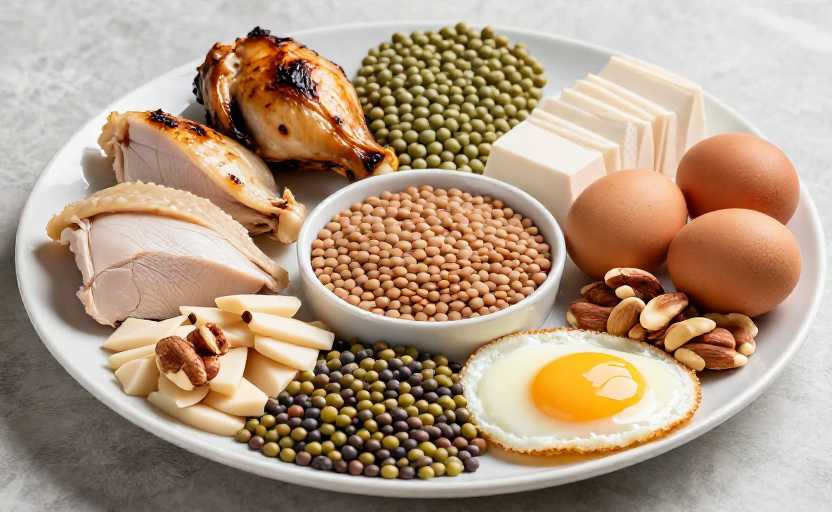
In the 6 years I have been doing nutritional consulting, I have seen too many people ask for "the same recipe for the national team" or "celebrity fat loss menu". They give up after only 3 days of eating, because they either find it too troublesome or too unpalatable. In the end, they feel that "nutritional diets are anti-human." I once had a client who worked in Internet operations. He followed an online tutorial and ate chicken breasts and boiled vegetables. After eating for half a month, not only did his hair fall out, but his aunt also delayed the treatment for 10 days. When he came for consultation, he cried and said that he was "fat even if he drank water." I didn't count the calories for him at all, I just asked him to eat at least 12 different ingredients every week, add one punch of grains and one egg every day, and eat deep-sea fish twice a week. I also kept all his favorite braised meats and hot pot once a week. I just asked him to cook more vegetables and less two portions of crispy meat when eating hot pot. After a month, he lost 2.3% of his body fat, and the low-density lipoprotein index in the physical examination also fell back to the normal range.
Speaking of this, someone must have mentioned that now it is said that a vegan diet is healthier, is it necessary to eat less meat? In fact, the nutrition community has been arguing about this issue for more than ten years, but there is no unified conclusion: vegan supporters believe that long-term intake of large amounts of red meat and processed meat products will increase the risk of cardiovascular disease, and that plant-based diets have better anti-inflammatory effects. ; Omnivores emphasize that the absorption rate of heme iron, vitamin B12, and Omega-3 from animal sources is much higher than that from plants. If ordinary people do not have a good nutritional balance, vegans are prone to anemia and nerve damage. My general advice to consultants is to eat whatever you like, as long as you can take appropriate nutritional supplements - if you choose a vegan diet, remember to supplement B12 regularly, and when eating dark green vegetables, add foods rich in vitamin C to promote iron absorption. ; If you choose omnivorous food, limit the frequency of red meat intake to no more than 3 times a week, and avoid processed meat products such as bacon and sausages. Both options can achieve nutritional balance, so there is really no need to step on each other.
There are also many people who struggle with "how much should I eat every day?" The standards of 1,500 kcal and 2,000 kcal mentioned on the Internet really don't need to be applied rigidly. You sat in the office and fished for 8 hours today, and you spent an afternoon hiking with friends last week. The difference in energy consumption is nearly 1,000 calories. If you stick to a fixed intake, you will either be too hungry to concentrate at work, or you will feel dizzy after eating too much all afternoon. I have friends who practice powerlifting. During the preparation period, they ate 2,400 calories a day and still lost body fat. During the offseason, they ate sugar water twice a week but did not gain weight. The core principle is to "live within your means." It doesn’t matter if you don’t know how to count calories. There is the simplest criterion: after eating a meal, you can last for 3 to 4 hours without being hungry. You won’t always want to reach for snacks because of greed, and you won’t feel sleepy. This amount is just right for you. Of course, some scholars say that a fixed intake is more conducive to blood sugar stability. This depends on your own life rhythm. If you have a regular daily schedule and have three meals on time, a fixed intake is of course no problem. If you often work overtime and have irregular work schedules, there is no need to stick to a rigid standard. Flexible adjustment will make you less likely to suffer from retaliatory overeating.
Don’t associate a nutritious diet with “quitting sugar”, “quitting oil” and “quitting happiness”. I have seen too many people say “I will never drink milk tea again” when they first set a goal. As a result, they buy 3 cups at once and drink it until they vomit within 3 days. In fact, they consume more calories than before. Nutritious diet is a long-term matter, and occasional "indulgence" will not affect your overall health at all. If you drink 1 cup of full-sugar milk tea and eat 1 hot pot meal every week, as long as the other 80% of the diet is balanced, it will be completely fine. I once had a client who was a private pastry chef and had to taste the cakes and cookies she made every day. I didn’t ask her to give up the habit of tasting. I just asked her to replace the white rice she usually eats with half of the cereals and drink an extra glass of milk every day. After half a year, her weight did not increase, and her previously high triglycerides dropped to normal levels.
Let me tell you a few little habits that I have used for many years. They are all a no-brainer: when buying vegetables, try to pick out different colors, such as red tomatoes, yellow corn, green lettuce, and purple cabbage. If you have 3 colors in one meal, the diversity is up to standard.; If you are too lazy to cook and order takeout, add more blanched vegetables and choose less fried snacks, which is better than eating fried chicken and burgers all the time. ; There is really no need to buy those "superfoods" that have been hyped to sky-high prices. The dietary fiber of quinoa is not much different from that of oats, and the antioxidant capacity of blueberries is not significantly different from that of ordinary grapes. Just choose what you like to eat and can afford, and you don't have to pay IQ tax for "health".
In the final analysis, a nutritious diet is to make your body feel better, not to impose a bunch of rules on you. No matter how scientific other people's plans are, it's useless if you can't stick to them. Finding eating habits that you can eat for a lifetime is the best nutritional guide. Oh, by the way, if you have underlying diseases such as diabetes, gout, or kidney disease, you still need to adjust your diet as directed by your doctor, and don’t try it on your own.
Disclaimer:
1. This article is sourced from the Internet. All content represents the author's personal views only and does not reflect the stance of this website. The author shall be solely responsible for the content.
2. Part of the content on this website is compiled from the Internet. This website shall not be liable for any civil disputes, administrative penalties, or other losses arising from improper reprinting or citation.
3. If there is any infringing content or inappropriate material, please contact us to remove it immediately. Contact us at: