Essay on the relationship between mindfulness and meditation
Mindfulness is a state of psychological awareness that anchors attention consciously and non-judgmentally on the real experience of the moment. Meditation is a collection of practical methods of various mental exercises including mindfulness training. Different cultural traditions, academic schools and practitioner groups have different definitions of the boundaries between the two, but their core mental regulation logic is highly interoperable.
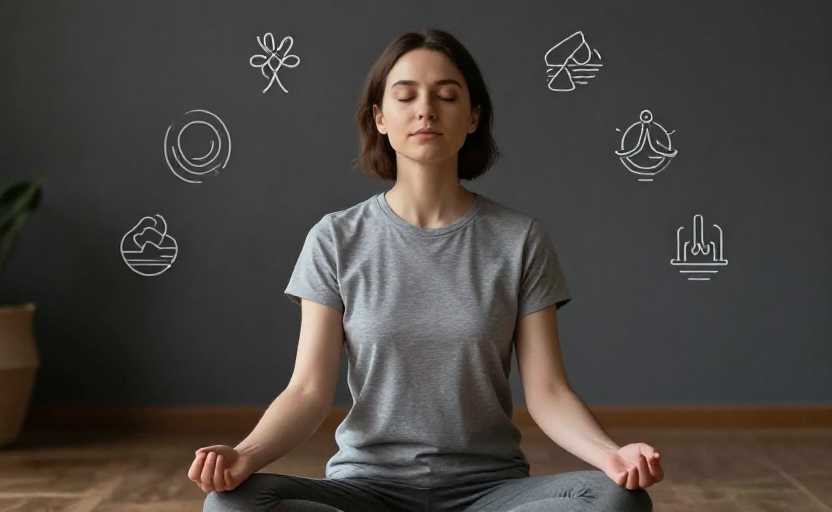
When I first attended the Theravada Vipassana Meditation Camp in Myanmar 7 years ago, I thought the two were the same thing until the camp leader Acharya pointed to the old lady who helped in the camp’s kitchen and said, “Sitting here every day with your legs crossed and counting your breaths is meditation. She has been washing bowls for thirty years. She knows the temperature of the water and the roughness of the bowl every time. She never thinks about yesterday’s salty vegetables or how many vegetables she has to pick tomorrow. She is in mindfulness now and does not need to sit down and meditate at all. ”That was the first time I had a real sense of the boundary between the two.
Put into different traditional contexts, the relationship between the two is indeed very different. The word corresponding to "mindfulness" in Pali is "Sati", which is itself a core branch of the Eightfold Path. Traditional Buddhist meditation (that is, the earliest concept of "meditation" in the localized context) is divided into two categories: samatha meditation and insight meditation. Stop meditation practices the stability of attention, and the core goal of insight meditation is to cultivate a sustained state of mindfulness. In this system, mindfulness is one of the core goals to be achieved by meditation, and the binding relationship between the two is very deep. However, if you look through the ancient annotations of the "Yoga Sutra", you will find that meditation in the Hindu tradition is more about achieving the ultimate state of "the unity of Brahman and self". Mindfulness is just a natural by-product of the training process and will not be singled out as the core goal. Even the training requirements of many meditation schools are to "empty the mind", which is exactly the opposite of the requirement of mindfulness to "be aware of all thoughts without judgment".
In the 1970s, when Kabat-Zinn separated mindfulness from the religious context and created Mindfulness-Based Stress Reduction (MBSR), in order to facilitate clinical standardization, he directly packaged "mindfulness meditation" into a set of fixed training procedures: body scanning, sitting meditation, and walking meditation accounted for more than 80% of the course content. This set The framework later spread around the world with the popularity of clinical psychology, which has led to the direct equation of the two in many popular science contents and even academic literature. This is also very reasonable. To conduct a randomized controlled experiment, there must be a standardized intervention method, and subjects cannot be allowed to "be more aware of the present". In the end, even the intervention variables cannot be quantified.
But in real life scenarios, the difference between the two is actually very obvious. Not long ago, when I was doing EAP for an Internet company, a product manager who was rushing to iterate every day stopped me and asked: "I can't even get 6 hours of sleep every day, and I can't spare 20 minutes to sit down and meditate. Will I never be able to practice mindfulness in this life?" ”I asked him to stand at the door of the conference room for 30 seconds before the next requirements review meeting, and feel the hardness of the floor under his feet, and the friction between the soles and socks. He put aside all the thoughts that came to his mind, "Today's demand will definitely be met by R&D." and stopped for 30 seconds. Later, he told me that in just these 30 seconds, the palms of his hands that he used to clenched during meetings no longer sweat much. You see, he did not use meditation at all in this process, but he did experience a state of mindfulness. I have similar feelings myself. When I first started practicing meditation, I clocked in every day, and I became extremely anxious after missing a day. Looking back now, the state of clocking in with a judgmental mind is completely contrary to mindfulness. It is not as good as last fall when I worked overtime until early in the morning, and when I went downstairs to buy breakfast, I suddenly smelled the fragrance of osmanthus on the roadside. There were no distracting thoughts, only the real feeling of the fragrance hitting my nose. That is true mindfulness.
Most of the controversies in the market now come from confusion about custom boundaries. Spirituality circles like to say that “mindfulness is the highest state of meditation.” The essence is to deify the concept and sell courses. ; Some researchers in cognitive neuroscience will assume that "all meditation can improve the level of mindfulness." However, if you practice visualization meditation - for example, following the guidance and imagining yourself lying on the beach and imagining white light covering your whole body, your attention will be anchored in the fictitious imaginary scene. You will not be aware of the real feelings of the moment at all, and you will not be able to improve your mindfulness ability no matter how long you practice. ; There are also some serious practitioners who say, “If you don’t sit cross-legged, it’s not meditation.” So, does walking slowly during walking meditation and feeling the touch of your feet when they are raised and lowered, does that count as meditation? Does feeling the body's center of gravity change while standing in a stance count as meditation? To put it bluntly, the essence of these disputes is that the definition standards are different in different scenarios, and there is no absolute right or wrong.
To be honest, for ordinary practitioners, it is really meaningless to study concepts. If you can take 10 minutes a day to sit down and practice guided meditation, and slowly develop awareness of the present moment, that would be great. ; If you are so busy that you don’t even have time to drink water, take 10 seconds to feel the ups and downs of your breathing while waiting for the elevator. No matter what it is called mindfulness, it can help you jump out of your head full of to-dos for half a minute, that’s enough. After all, whether it is mindfulness or meditation, the essence is to make you live more clearly, rather than to let you be tied up by concepts.
Disclaimer:
1. This article is sourced from the Internet. All content represents the author's personal views only and does not reflect the stance of this website. The author shall be solely responsible for the content.
2. Part of the content on this website is compiled from the Internet. This website shall not be liable for any civil disputes, administrative penalties, or other losses arising from improper reprinting or citation.
3. If there is any infringing content or inappropriate material, please contact us to remove it immediately. Contact us at: